





Fuel Consumption
1,245,582.74
Litres
Manage resources efficiently to reduce environmental impacts, control pollution, minimize waste, and promote efficient energy use.
Fuel Consumption
1,245,582.74
Litres
Electricity Consumption (kWh)
1,380,111.00
kWh
Greenhouse Gas Emissions (tCO₂e)
5,964
Tonnes of Carbon Dioxide Equivalent (tCO₂e)
Water Consumption
21,661.00
Cubic Metres
AOT Ground Aviation Services Co., Ltd. (AOTGA) conducted a sustainability materiality assessment for fiscal year 2025, referencing the GRI Standards 2021 and the SET ESG Reporting Guide to ensure alignment with the company’s business context as a ground handling service provider in Thailand.
The assessment aimed to identify and prioritize sustainability issues that are material to the organization’s key stakeholders, as well as those that may impact AOTGA’s business across environmental, social, and economic dimensions. The assessment covered the company’s entire value chain, from ground handling and cargo services to passenger services and ground support equipment maintenance.

Identification of Material Issues
Analyze sustainability issues based on internal and external factors, as well as sustainability trends in the ground handling services industry.

Stakeholder Engagement
Gather feedback and analyze the expectations of both internal and external stakeholders, while reviewing material issues annually.

Assessment and Prioritization
Prioritize material topics based on key factors and their impacts on stakeholders, considering both positive and negative environmental, social, and governance impacts, as well as an analysis of risks and opportunities. Present the results in a Materiality Matrix format.

Validation and Verification
Prioritize material topics based on key factors and their impacts on stakeholders, considering both positive and negative environmental, social, and governance impacts, as well as an analysis of risks and opportunities. Present the results in a Materiality Matrix format.

Disclosure of Information
Disclose sustainability performance and the management of material sustainability issues through the annual sustainability report, ensuring that all stakeholders have access to accurate, complete, and up-to-date information.
In 2025, AOTGA assessed its material sustainability topics by benchmarking against industry peers, reviewing the business environment, and gathering input from key stakeholders. Through this process, the Company identified nine material sustainability topics, as follows:
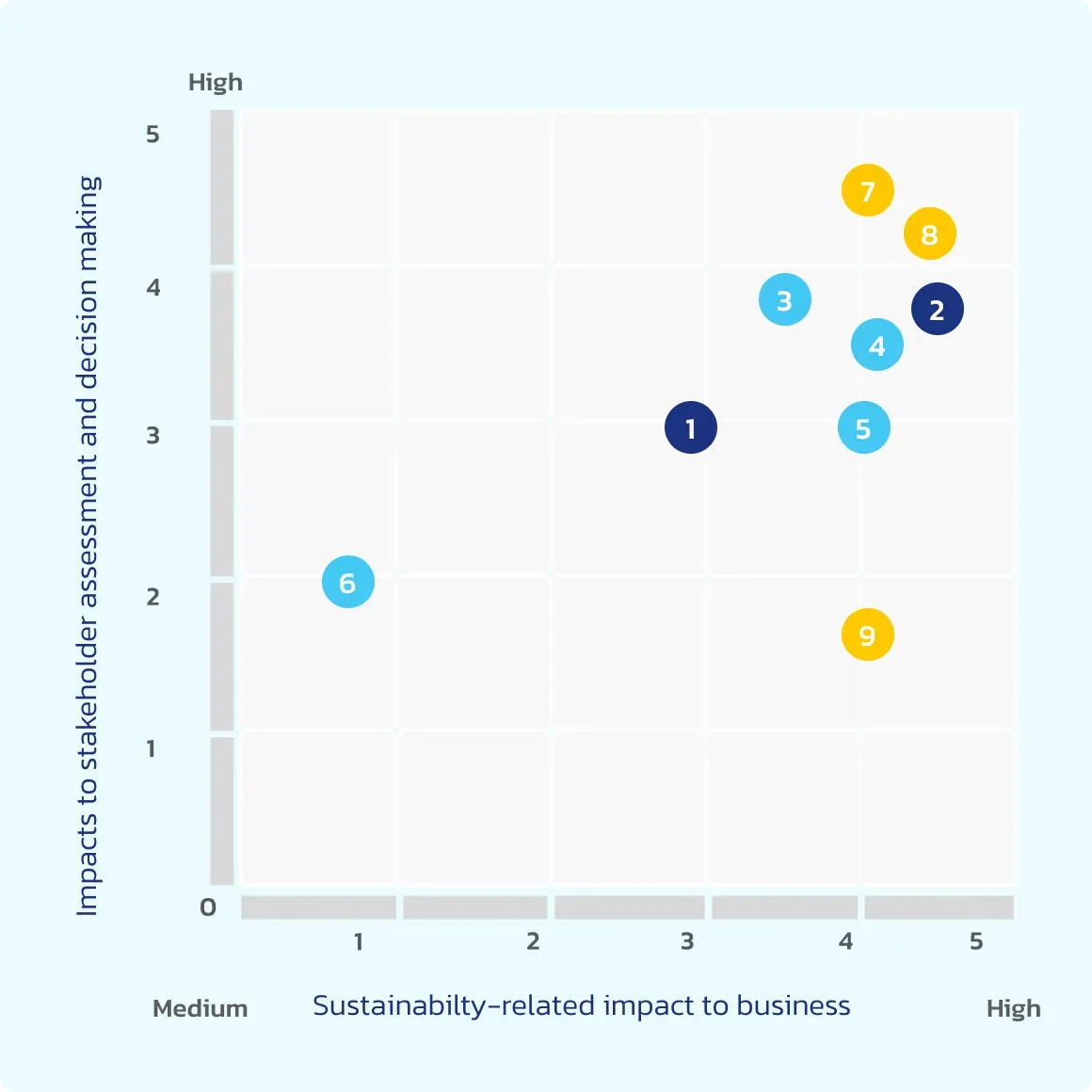
Environmental
Climate Change and Resilience
Energy Management
Social
Customer Relationship Management
Employee Development
Occupational Health and Safety
Customer Relationship Management
Governance
Good Governance
Strengthening Risk Management Systems
Innovation Management